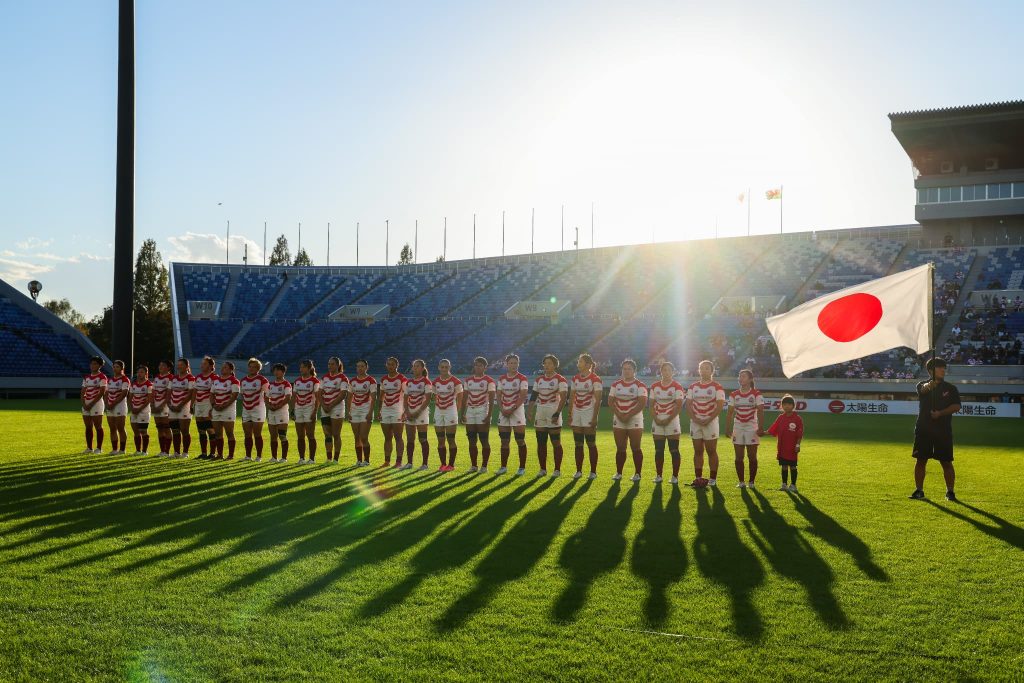
Sakura Fifteen Fall to Wales in Second Test at Kumagaya
The Sakura Fifteen went down 5-29 to Wales in their second consecutive test match on Saturday, October 31, at Kumagaya Rugby Stadium. Despite a spirited performance, particularly in the opening half, Japan were unable to match the visitors’ clinical finishing as Wales ran in five tries to secure a well-deserved victory and complete a clean sweep of their two-match series.
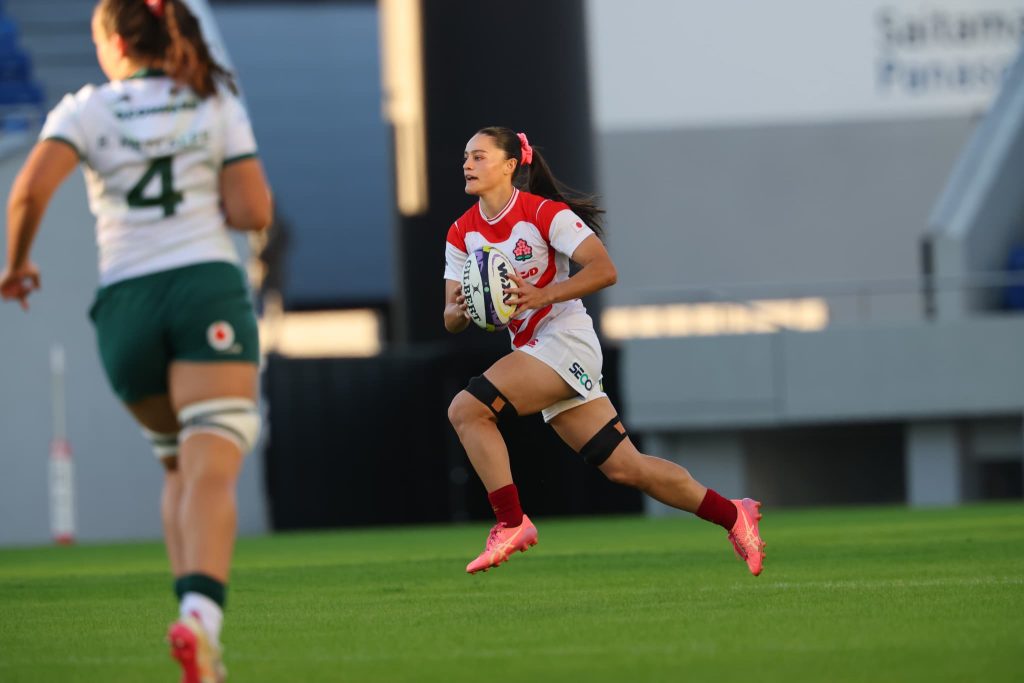
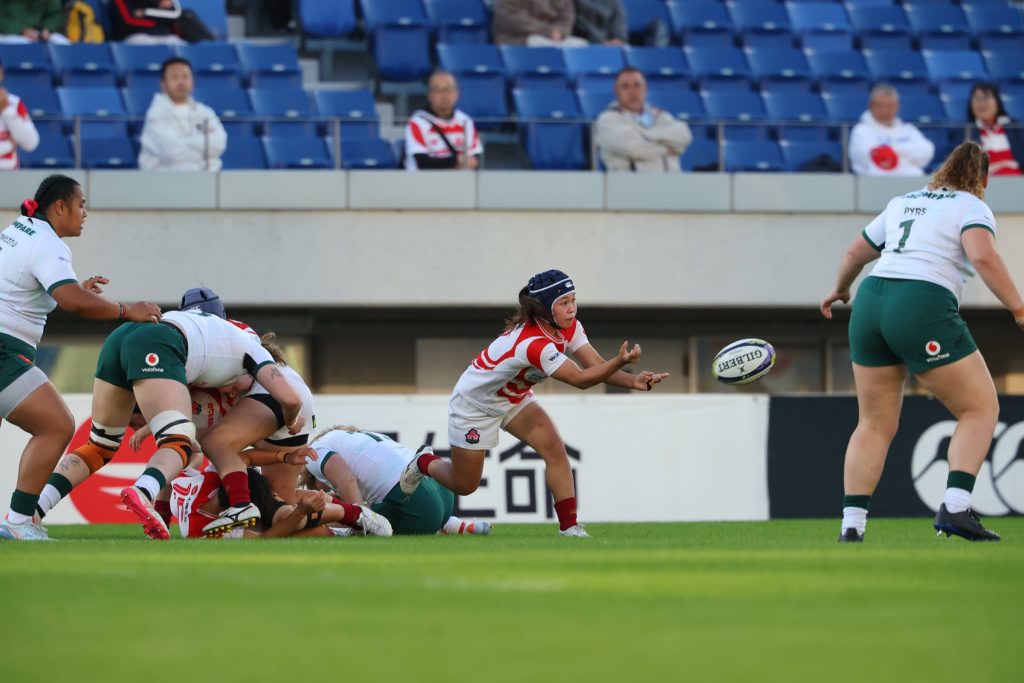
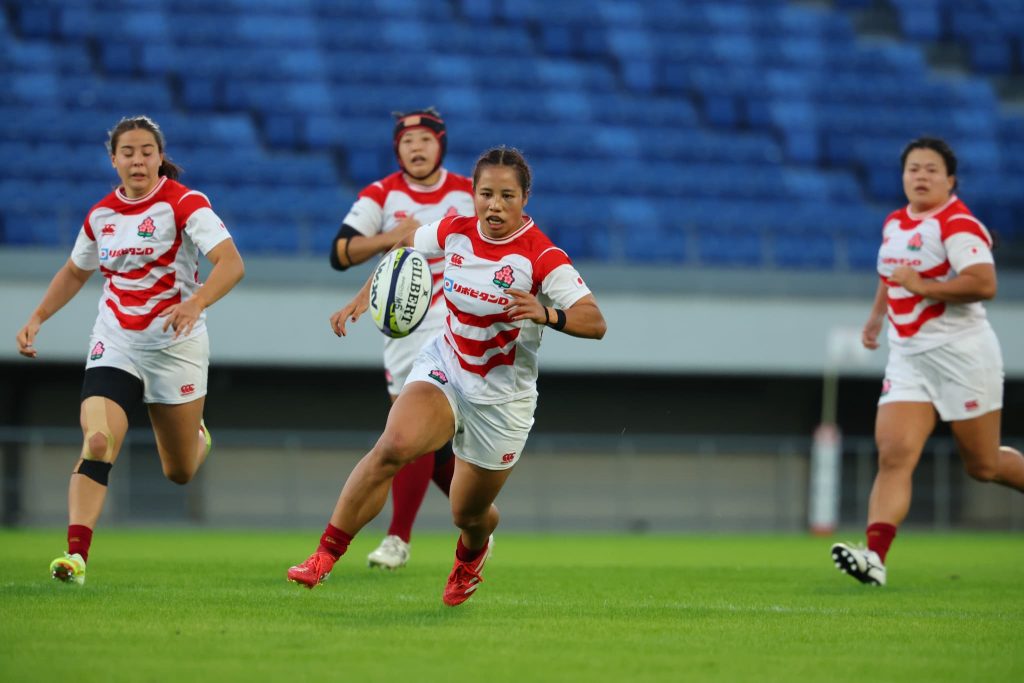
Following last weekend’s 0-17 defeat in Tokyo, Japan came into the match determined to produce a stronger attacking performance. Playing in considerably better conditions than the heavy rain of Tokyo, the Sakura Fifteen showed greater ambition with ball in hand, putting together several promising attacking passages and regularly challenging the Welsh defensive line.
Wales, however, made the stronger start, crossing for the opening try in the seventh minute to take an early 0-7 lead. Japan responded positively, with hooker Moe Nagaoka powering over in the 15th minute to reduce the deficit to just two points at 5-7.
Encouraged by their early success, Japan continued to attack with confidence, demonstrating good continuity and an ability to stretch the Welsh defence. However, despite creating several promising opportunities, the home side struggled to retain possession at critical moments. Too often, insufficient support at the breakdown left Japanese ball carriers exposed, allowing the powerful and industrious Welsh back rowers to compete over the ball and secure turnovers, snuffing out Japan’s promising attacking raids.
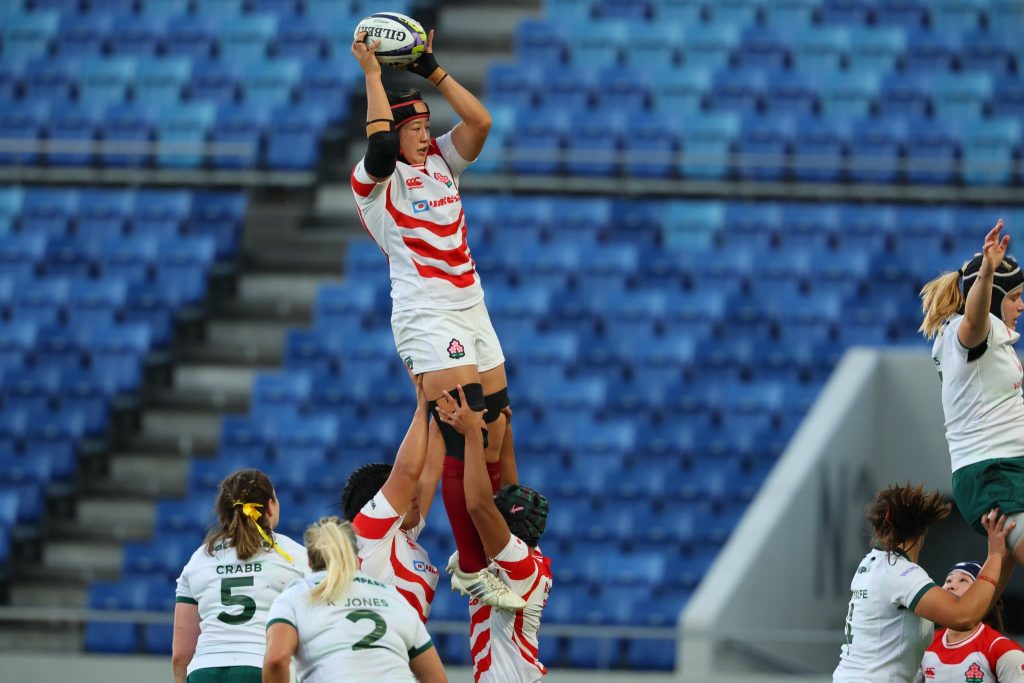
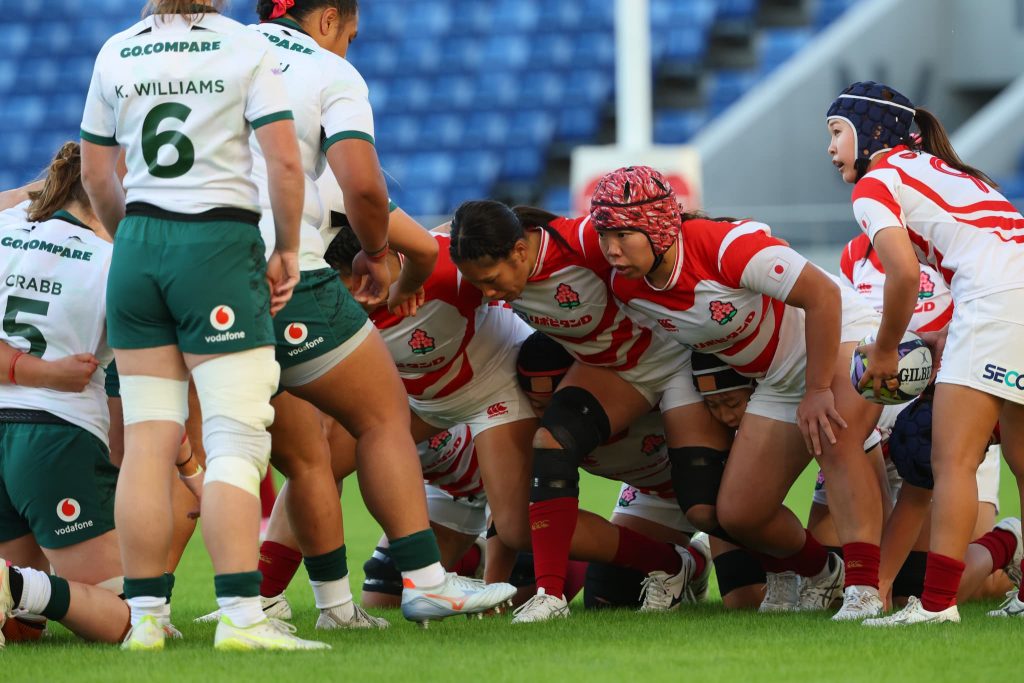
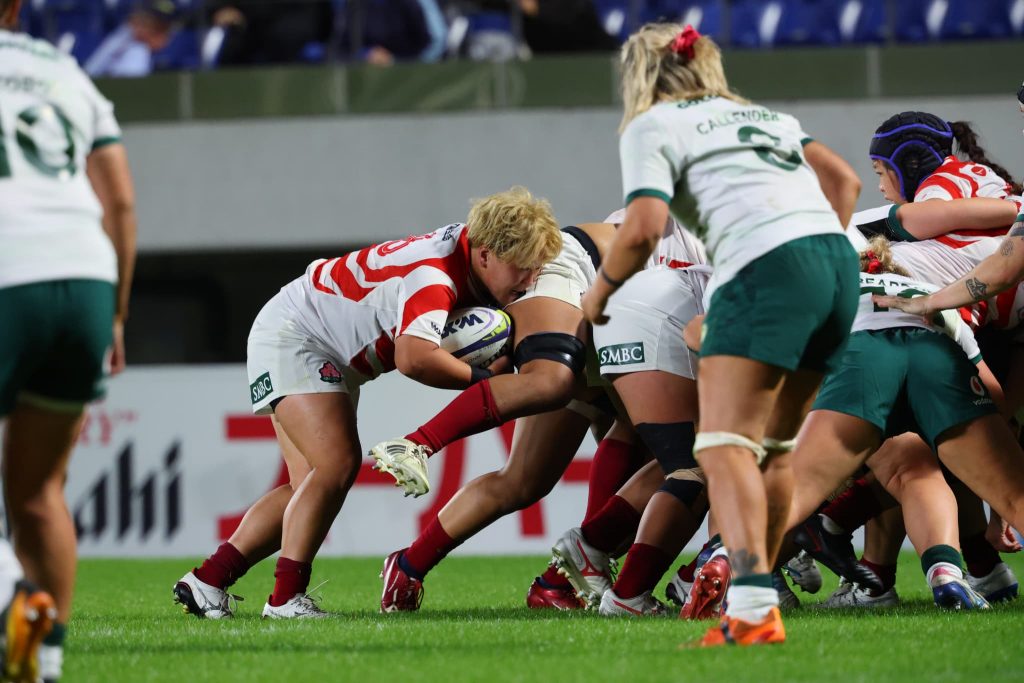
Enjoying a 117kg combined weight advantage across their starting forward pack, Wales made their physical presence count, particularly at the breakdown and at scrum time. Their physical dominance along with their ability to disrupt Japan’s attacking momentum increasingly shaped the contest.
Missed opportunities from the Sakura Fifteen proved costly as Wales demonstrated considerably greater efficiency when entering Japanese territory. The visitors crossed for two further tries in the 25th and 39th minutes, taking a commanding 5-19 lead into the break, a scoreline that did not entirely reflect Japan’s positive play during the opening forty minutes.
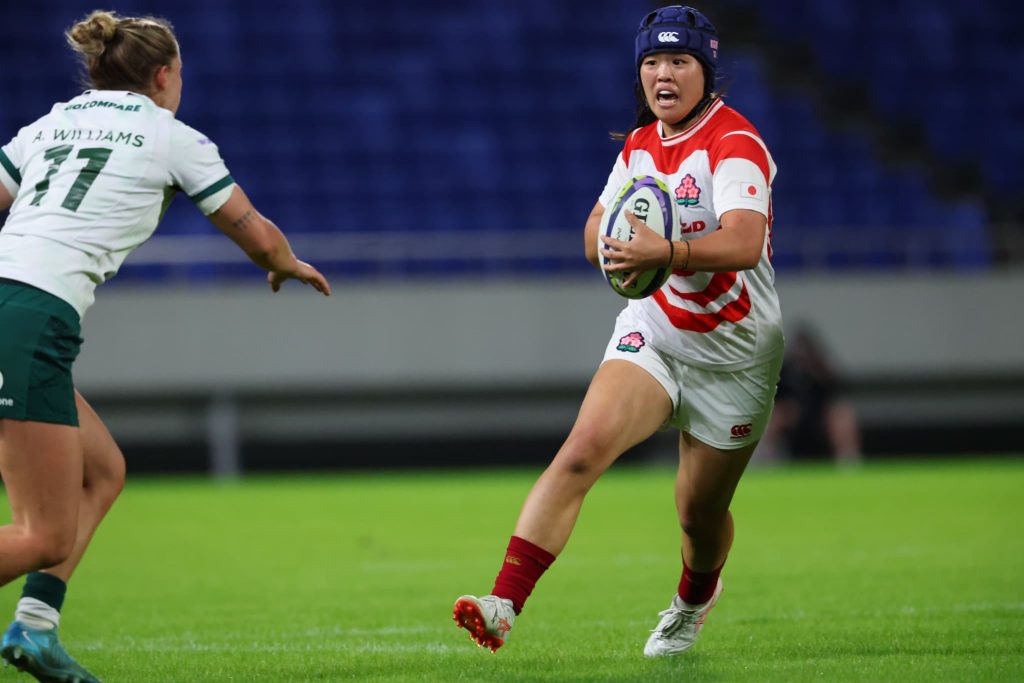
The second half saw Wales further assert their dominance, combining their physical advantage with accurate execution and strong defence. Japan continued to battle courageously, but handling errors and lapses in accuracy increasingly disrupted their attacking rhythm, preventing them from turning possession and territorial opportunities into points.
The task became more difficult when flanker Jennifer Nduka was shown a yellow card five minutes after the restart. Wales capitalised on their numerical advantage, crossing for their fourth try in the 49th minute to extend the lead to 5-24. Six minutes later, the visitors added their fifth and final try of the afternoon to take the score to 5-29.
To their credit, the Sakura Fifteen continued to show determination and enjoyed extended periods of possession during the final quarter. Wales were reduced to 14 players following a yellow card for a deliberate knock-on, before a second yellow card temporarily left the visitors with just 13 players on the field.
Japan pressed hard to take advantage, mounting several attacks deep inside Welsh territory. However, the visitors’ disciplined defensive effort, particularly at the breakdown, continued to frustrate the home side. Despite their numerical advantage and sustained pressure, Japan were unable to add to their first-half try.
Wales were deserved winners, their physicality, defensive resilience and superior finishing proving decisive across the eighty minutes. For Japan, there were encouraging signs in their first-half attacking performance and the determination shown throughout the match. However, the inability to secure possession at key attacking rucks, coupled with errors in execution, ultimately prevented them from converting their opportunities into points.
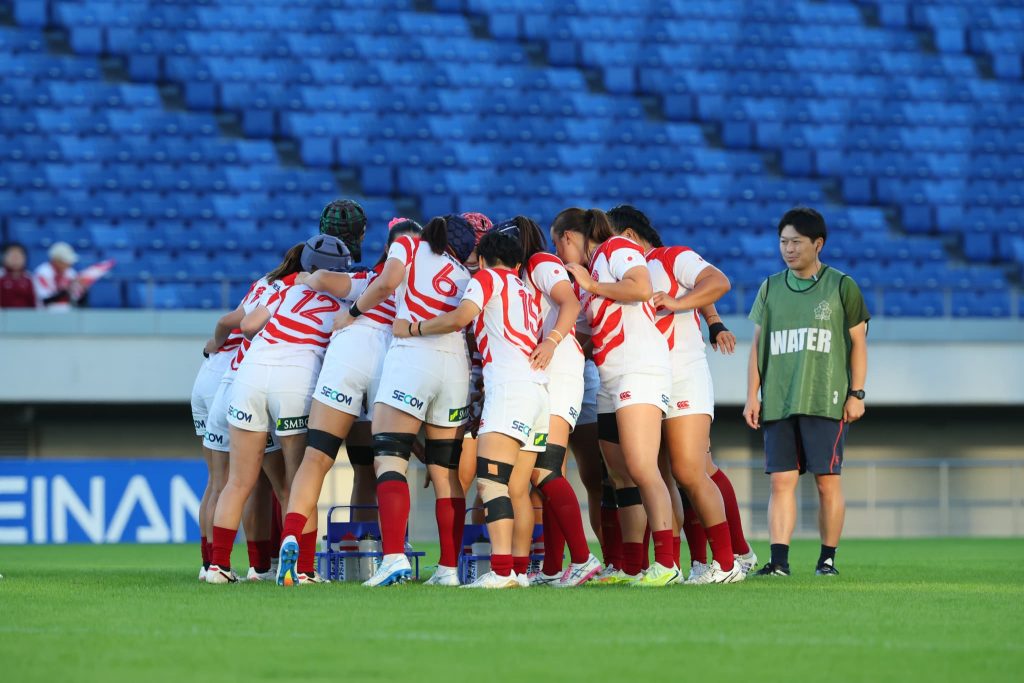
The result brings Japan’s 2026 WXV Global Series campaign to a close, with Head Coach Toshizumi Kitagawa and his squad left with valuable lessons from a demanding international programme against strong European opposition.